
What Is Retinal?
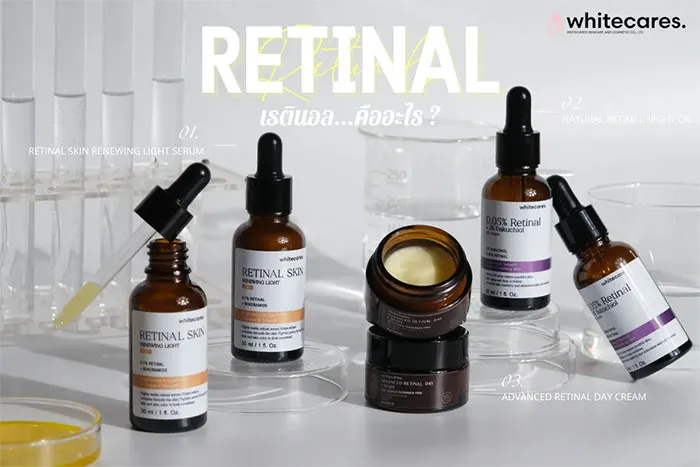
What Is Retinal?
One of the biggest skincare trends over the past few years has been the use of Retinal and other Retinoids, a group of Vitamin A derivatives widely recognized for their anti-aging and skin-rejuvenating benefits.
Terms such as Retin-A, Retinol, Retinoids, Retinoic Acid, Vitamin A, Retinal, and Tretinoin can often be confusing. Before understanding Retinal, let's first get to know what Retinoids are.
What Are Retinoids?
Retinoids are a family of compounds derived from Vitamin A. This group includes several different forms, such as:
- Retinyl Esters, including Retinyl Propionate and Retinyl Palmitate
- Retinol (Vitamin A)
- Retinaldehyde (Retinal)
- Retinoic Acid
Retinal (Retinaldehyde) is a common ingredient found in anti-aging skincare products. Numerous studies have demonstrated its effectiveness in reducing signs of aging, including post-acne marks, dark spots, and fine lines, especially in people aged 30-40 and above. In addition to its anti-aging benefits, Retinal also helps the skin appear more youthful by stimulating collagen production and accelerating skin cell turnover, resulting in smoother and more refined skin.
Therefore, ingredients such as Retinol, Retinaldehyde, and Retinyl Esters were developed. However, the primary active form is Retinoic Acid, as this form binds directly to receptors in the skin. The conversion pathway is as follows:
Retinyl Esters → Retinol → Retinaldehyde (Retinal) → Retinoic Acid (Active Form)
A key feature of White's skincare products is the use of Retinal (Retinaldehyde) as the main active ingredient. Research has shown that Retinal provides effects similar to Tretinoin in improving photoaging, particularly in repairing elastic fibers and collagen. In addition, it has antibacterial activity against C. acnes (the acne-causing bacteria) and promotes skin cell turnover, helping to improve clogged pores and inflammatory acne.
A study by Kwon, H. S. et al. (2018) found that using 0.05-0.1% Retinal for three months helped reduce wrinkles, improve skin smoothness, brighten the complexion, promote a more even skin tone, and reduce Transepidermal Water Loss (TEWL).
Using Retinal at night is generally recommended, although it can also be used during the daytime. Since the skin may become more sensitive to sunlight, applying sunscreen afterward can help address this issue. Following Retinal with a moisturizer containing Hyaluronic Acid is also beneficial, as it helps maintain skin hydration and reduces the risk of irritation.
However, Whitecares does not recommend using Retinal as a substitute for acne medication.